
Cardiovascular and Thoracic Surgery
Overview
The Department of Cardiovascular and Thoracic Surgery (CVTS) at Amrita Hospital, Faridabad, provides comprehensive surgical care for diseases of the heart, lungs, chest wall, diaphragm, and blood vessels.
Backed by state-of-the-art facilities, including nine catheterisation labs, four dedicated cardiac operating theatres, and a centrally monitored 30-bed Coronary Care Unit (CCU), our experienced cardiac surgeons excel in the entire range of cardiovascular and thoracic procedures, from routine bypasses to complex transplants.
With cutting-edge technology and pioneering skills in minimally invasive thoracic and robotic surgeries, the team provides effective treatment for even the most critical conditions, such as severe heart or lung failure. Advanced life-saving systems, such as ECMO and VADs, help ensure safer procedures, faster recoveries, and optimal patient comfort.
At Amrita Hospital, Faridabad, we ensure every patient, from newborns to the elderly, receives the best possible care through world-class expertise, advanced technology, and compassionate support. This commitment makes us one of India’s most trusted centres for advanced cardiovascular and thoracic surgery across all age groups.
Specialisations
The CVTS Department at Amrita Hospital, Faridabad, offers expertise across the full spectrum of cardiac, vascular, and thoracic surgery, ranging from routine procedures to advanced transplants and emergency care, delivering safe, precise, and patient-centred treatment for all age groups.



Doctors

Why Choose Amrita Cardiovascular and Thoracic Surgery?
The CVTS Department at Amrita Hospital offers world-class treatment for complex heart, lung, and vascular conditions– blending surgical excellence, cutting-edge technology, 24/7 availability, and compassionate care to deliver precise treatment with maximum patient comfort.
Comprehensive Cardio-Thoracic and Vascular Services
Full spectrum of surgical care under one roof — from emergency interventions to advanced transplants and rehabilitation support.
Our expertise spans across:
- Adult Cardiac Surgery
- Paediatric & Congenital Cardiac Surgery
- Thoracic Surgery
- Vascular & Endovascular Interventions
- Minimally Invasive & Robotic Surgery
- Heart & Lung Transplant
- Advanced Cardiac Diagnostics
- Emergency Cardiac Support
- Post-Surgical Critical Care
- Cardiac Rehabilitation
Unmatched Surgical Excellence
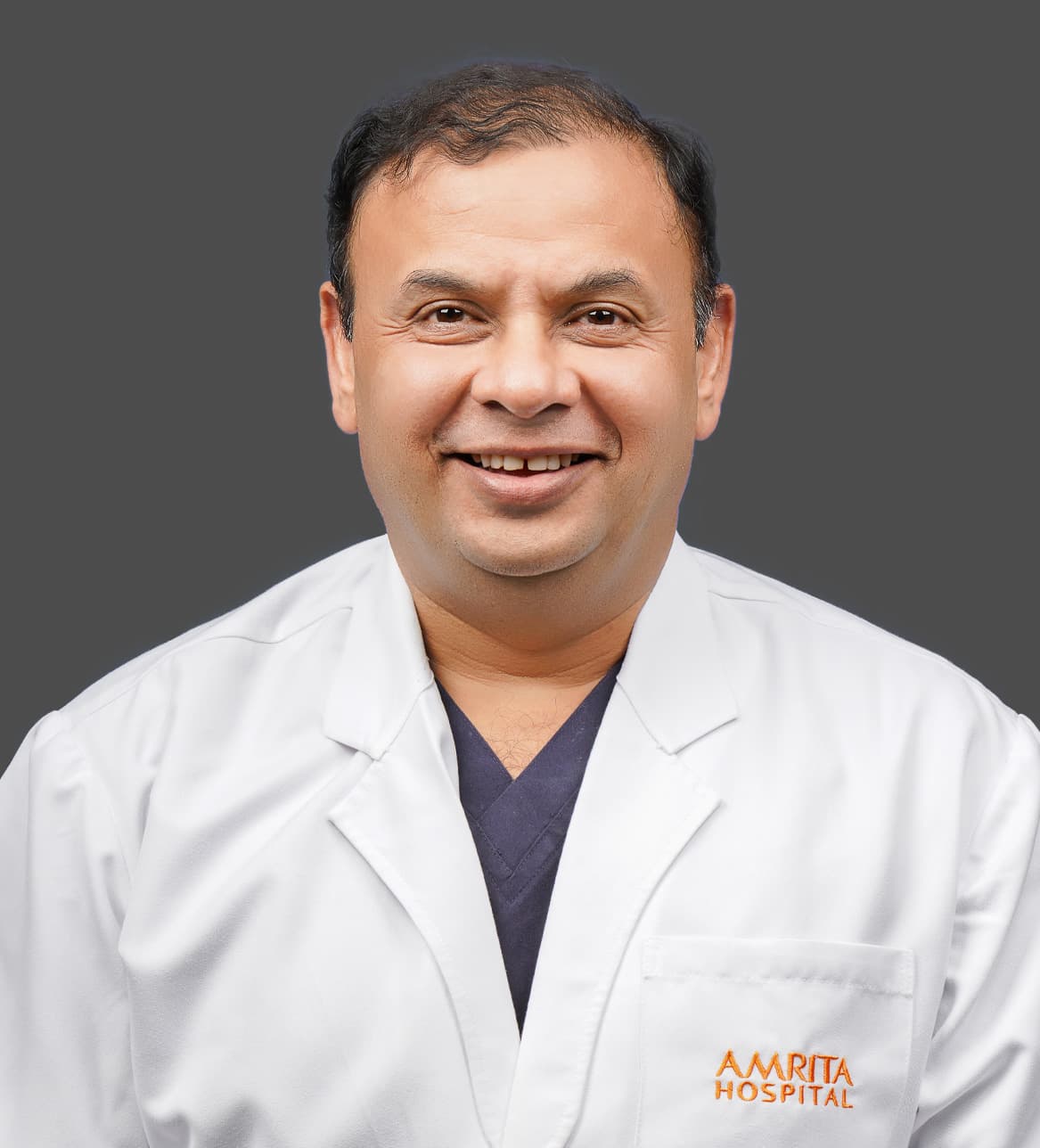
The CVTS Department at Amrita Hospital, Faridabad, is led by some of India’s finest cardio-thoracic surgeons, supported by expert cardiac anaesthesiologists, specialised nurses, cardiologists, critical care specialists, and rehabilitation professionals. Together, this multidisciplinary team ensures safe, precise, and compassionate care at every stage of your journey.
State-of-the-Art Facilities and Cutting-Edge Technology
Amrita Hospital, Faridabad, is equipped with some of the most advanced facilities in India, enabling precise, personalised surgical care for all types of cardiac, thoracic, and vascular conditions. Our infrastructure is designed to ensure the highest standards of safety, comfort, and outcomes.
Specialised Cardiac Infrastructure
- Cardiac PET, PET-CT, and MRI for precision cardiac imaging
- 9 state-of-the-art catheterisation labs (Cath labs)
- 4 dedicated cardiac operating theatres
- Delhi NCR’s first Hybrid Operating Room, integrated with a 40- bedded Cardiac ICU
- Centrally monitored 30-bedded Coronary Care Unit (CCU) with direct Cath lab access
- Intuitive Da Vinci Xi Robotic Surgical System for advanced cardiac and thoracic surgeries
- KARL STORZ HD VATS Unit for high-precision Video-Assisted Thoracoscopic Surgery (VATS)
- ECMO systems for advanced cardiopulmonary support
- Intra-operative imaging (TEE, 3D echo, navigation) for guided valve repair
24/7 Emergency Cardiac Surgery Care
Our CVTS team works around the clock to provide immediate surgical support in life-threatening heart, lung, and vascular emergencies. Backed by the latest technology, well-defined emergency protocols, and integrated facilities such as a Hybrid Operating Room, our team ensures timely interventions to manage critical situations and save lives.
Our emergency expertise includes:
- Immediate surgical intervention for critical heart and vascular emergencies
- Acute aortic dissection and ruptured aneurysm repair
- Emergency coronary artery bypass grafting (CABG)
- Management of thoracic trauma (blunt or penetrating injuries affecting the heart, lungs, or major vessels)
- Emergency valve surgery
- Pulmonary embolism and Thromboendarterectomy procedures
- Extracorporeal Membrane Oxygenation (ECMO) support
- Comprehensive surgical support for cardiac arrest and postoperative emergencies
Compassionate Patient-Centred Care
Cardio-thoracic and vascular surgeries are complex, and it is natural for patients to feel anxious about the outcomes. What sets Amrita apart is our compassionate approach, ensuring holistic well-being that addresses not just physical health, but also emotional and psychological needs.
Through regular communication, psychological support, jargon-free patient education, and individualised treatment protocols tailored to each patient’s lifestyle and medical conditions, we strive to make every recovery journey as smooth and reassuring as possible.
Diseases and Treatments
The Department of Cardiovascular and Thoracic Surgery at Amrita Hospital, Faridabad, manages a broad spectrum of conditions affecting the heart, lungs, chest wall, diaphragm, and blood vessels. By combining advanced surgical expertise with compassionate, patient-centred care, we ensure safe and effective treatment for adults and children.


FAQs
Like all other muscles in the body, the heart muscle also needs a constant supply of oxygen-rich blood to work properly. Three arteries, originating from the aorta and known as the coronary arteries, carry this blood to the heart muscle.
A heart attack, medically called a myocardial infarction (MI), occurs when these arteries are narrowed or blocked, reducing blood flow. The heart continues to beat, but the affected muscle is starved of oxygen and becomes infarcted (damaged). If not treated quickly, the damage can become permanent and life-threatening.
A cardiac arrest is different — it is when the heart suddenly stops pumping blood altogether. It usually happens due to a problem with the heart’s electrical system, but it can also occur as a serious complication following a major heart attack (MI).
In cardiac arrest, blood flow to the brain and body stops completely, and survival depends on immediate interventions such as CPR and defibrillation.
Both stenting (angioplasty) and bypass surgery (CABG) aim to restore blood flow to the heart muscle, but the choice depends on the type of blockages and the patient’s overall health.
Stents (angioplasty) are usually preferred when there is one or two simple blockages that can be opened easily using a minimally invasive technique.
Bypass surgery (CABG) is advised when the blockages are complex, severe, or present in multiple arteries. In this procedure, doctors use healthy blood vessels from the leg, chest, or arm to create new pathways for blood to reach the heart muscle.
No, coronary artery bypass grafting (CABG) is not a permanent cure.
The surgery restores blood flow to the heart muscle but does not correct the underlying disease that caused the blockages.
New blockages may still develop in other arteries, or even in the grafted vessels, over time. That is why lifestyle changes, medications, and regular follow-up are crucial for achieving the best long-term benefits.
Whenever possible, surgeons prefer valve repair because it preserves your natural valve.
Though more technically challenging than replacement, repair usually offers significant long-term benefits:
- Lower risk of complications like infection or blood clots
- Often avoids lifelong blood thinners
- Better overall heart function and quality of life
In many cases, a valve repair can last decades and sometimes lifelong. By contrast, a prosthetic valve (mechanical or biological) may need to be replaced after a specific period.
If the natural valve is too damaged to repair, valve replacement is the best option.
Heart transplants are highly successful. On average, about 75% of patients survive five years or more after surgery, and many live multiple decades.
With medicines to prevent rejection, regular medical follow-ups, and healthy lifestyle choices, most patients can enjoy a normal life of work, travel, fun, and happiness.
Thoracic surgery deals with operations on organs inside the chest, such as the lungs, oesophagus (food pipe), and areas around the heart.
Robotic thoracic surgery is a minimally invasive method that uses small incisions and robotic instruments to perform these complex procedures with greater precision and control.
This approach provides surgeons with 3D vision and fine movement accuracy, leading to less pain, reduced blood loss, fewer complications, faster recovery, and shorter hospital stays compared to traditional open surgery.